The Whole Mess

Notes from the middle of everything

Collector of contradictions, student of imperfection, and occasional meditator. Writing from the messy middle with equal parts honesty and humor.
  • Dating While Disabled: Attraction & Ableism

    Part 1 of 8

    Now that I’ve moved into the maintenance stage of having had breast cancer, I’m finally feeling like I can put my attention and focus back into dating seriously. Unfortunately, there are very few readily available role models for dating while disabled. That’s why I was intrigued to break open Datable by Jessica Slice and Caroline Cupp.

    (more…)
  • Good Kings Bad Kings

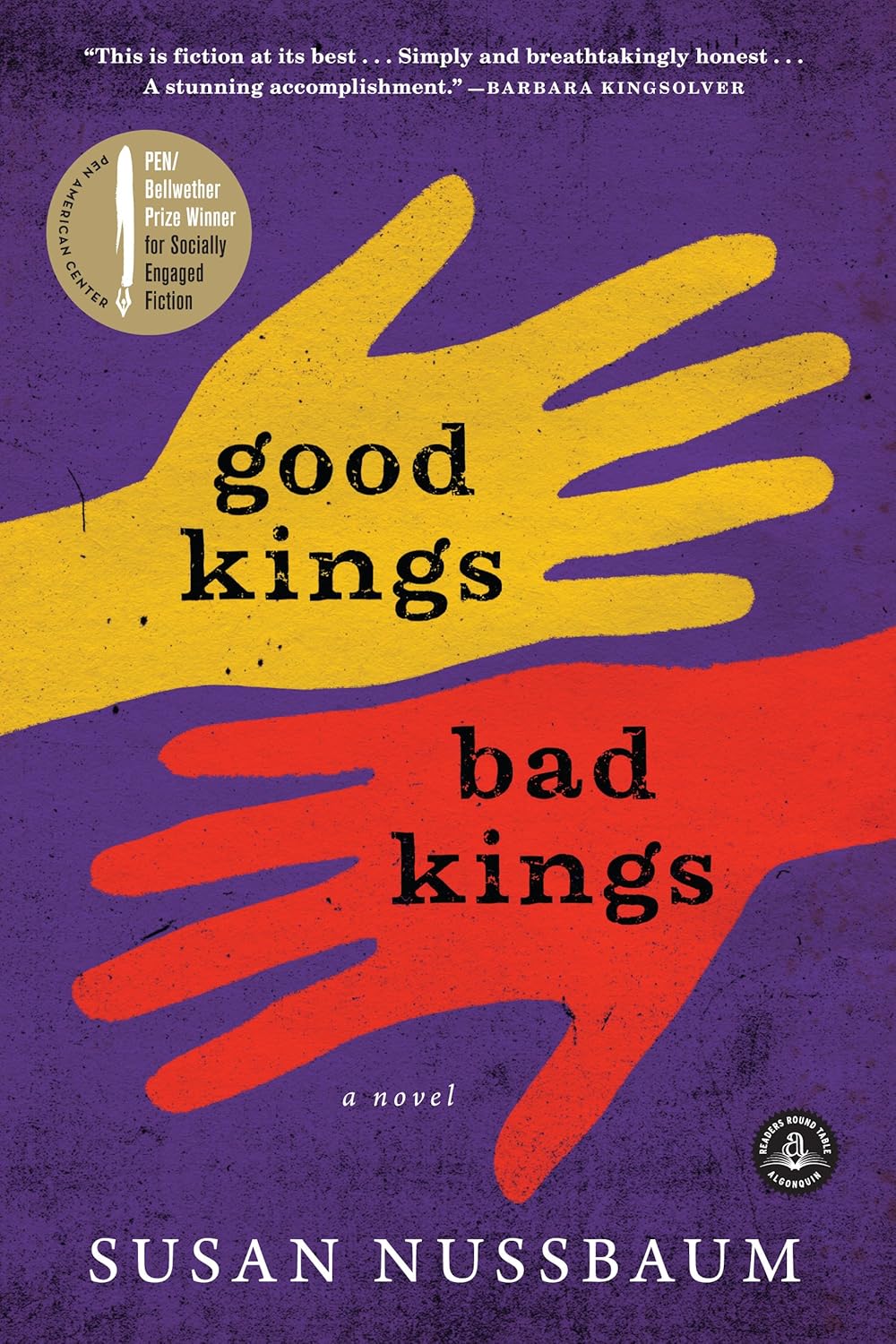
    I recently finished the 2013 book Good Kings Bad Kings by Susan Nussbaum. Overall, it was a good read. The linguistics she uses with some of her characters left me a little uncomfortable, as Nussbaum is a white author writing as BIPOC characters. I hope that, at the very least, she consulted BIPOC readers and had them test-read the novel before publication.

    Also, fair warning, there’s a fairly graphic scene where one of the kids is sexually assaulted by a staff member. Just something to be aware of if you decide to pick up the book. It’s most explicit on pages 64-67 in the paperback copy and 47-49 in the e-book.

    All that said, one of my course assignments was to choose a character in the book and provide a character map focusing on a specific trait. We were then to connect to a book theme, which I decided to choose was disability culture/community. It was an interesting exercise and I thought I’d share my thoughts with you all as well.

    Btw, I chose Joanne because I see so much of myself in her, both in how she became disabled and in her crip attitude and wry sense of humor. Honestly, I could hear her words coming out of my mouth. So, here goes:

    Character Map: Joanne is Observant
    One of Joanne’s defining traits is that she is deeply observant, not just of people but also of the subtle cultural and political dynamics surrounding disability. She notices things that other staff either ignore or normalize, and she identifies the underlying patterns of ableism shaping everyday life at ILLC. Early in the novel, Joanne observes how the institution uses euphemistic language to disguise harm: “Naming these places is all about misdirection” (p. 10). She even points out how “The kids here are called patients” (p. 11), or in Mrs. Phoebe’s case, “her angels” (p. 11). Joanne recognizes that the language of “care” functions as a mask, allowing the institution to appear benevolent while maintaining control over disabled youth. Her attention to language reflects how sharply she perceives the dissonance between what these systems claim to be and the lived reality inside them.

    Joanne’s observations often extend to cultural knowledge that only emerges through shared disability experience. For example, she notes, “It’s well known in crip circles that the best place for a crip to get a job is a place that’s swarming with other crips” (p. 9). This is more than a practical comment. It shows her awareness of disabled community patterns, norms, and insider truths. She sees disability culture not as an abstraction but as something shaped through everyday survival and solidarity. Joanne’s observational skills are rooted in her lived experience as a disabled adult who understands the unspoken rules governing the world she navigates.

    Theme: Disability Culture/Community; Joanne & Reclaiming “Crip”
    A powerful moment of disability cultural expression comes when Joanne explicitly discusses her own language use: “I myself prefer ‘crip,’ or variations on ‘crip,’ strictly for personal use… Why not take back the king of all pejoratives, ‘cripple,’ and re-empower it by giving it the crip imprimatur?” (p. 106). This quote is a textbook example of disability culture asserting itself against the dominant norms that stigmatize disability. Joanne situates herself within a community conversation: some disabled people prefer not to use “crip,” others actively reclaim it. She then frames her own choice as an act of empowerment rather than as a source of shame.

    What makes this passage especially meaningful is that Joanne articulates a distinctly crip-cultural logic: reclaim the slur, redefine it through community usage, and resist the stigma imposed by nondisabled society. Her language choices reflect an identity grounded in pride, solidarity, and political consciousness. In claiming “crip” for herself, Joanne marks herself as part of a cultural lineage within disability activism. This moment reinforces how disability culture is built through shared language, humor, resistance, and the refusal to let outsiders define what disability means.

  • I’m a Breast Cancer Troublemaker

    I’ve never settled for the pink-washing of my experience. Even with the best of possible outcomes, my cancer story has been gruesome, painful, and arduous. It’s also been full of unexpected beauty and eroticism. The idea of being a “survivor”, while helpful to many who need the narrative to get through the ordeal, feels problematic for me personally.

    (more…)
  • Notes From the Middle of a Pain Flare

    It sneaks up on me… just a twinge, slight pressure rumbling just beneath the surface. Realization hits me on a subconscious level, not quite aware of what some part of me already knows is on the way.

    (more…)
  • A Crip Aesthetic Reading of My Work

    This commentary is a reflection on poems Folsom Follies and Scartography, both of which now have original art that I’ve created attached.

    Brueggemann (2013)1 asserts that when disability is claimed as a “positive identity marker,” it enables the creation of art that celebrates human variation (p. 286). Claiming crip as an identity has allowed me to create from pride and embodiment rather than repair or recovery. My poems, Folsom Follies and Scartography, are acts of crip life-writing that explore sexuality, pain, and the body as sites of resistance and beauty. Together, they reclaim narrative control from systems that label and contain disabled lives.

    (more…)
  • PTSD-mindful mindfulness

    I’ve often struggled with meditation because it triggers my post-traumatic stress disorder (PTSD). If I close my eyes, I tend to go into flashbacks. Opening my eyes doesn’t seem to be much better because I become too distracted by everything around me. I don’t like guided meditations. My physical impairments make it nearly impossible to do movement meditation (such as walking or doing the dishes).

    If you recognize yourself in any of these experiences, you are not alone. It is quite common for individuals with PTSD to struggle with meditation practices. I’d like to share with you some alternative mindfulness practices that may be more accessible to you. However, before I jump into that, I’d like to put in a plug for David Treleaven’s book Trauma-Sensitive Mindfulness. It helped me put my experience into a broader context and understand that nothing was wrong with me and that there were still options available to me.

    Now, let’s jump into some PTSD-mindful mindfulness practices!

    1. Choose an external fixed anchor instead of your body or the breath. A somatic focus can easily be overwhelming and triggering for trauma survivors, so finding a focus outside of the body can be an incredibly useful tool. Try focusing on: a candle flame, lamp, or even a small LED light; a specific object with texture or personal meaning to you (a stone, a piece of favorite jewelry, etc.); a phrase or word on a notecard that you can look at. (If you’re unsure what phrase or word to focus on, considering buying some affirmation cards and use those to focus on. I’m especially fond of my Thera-Pet Cards.)
      • Practice: Let your eyes rest on the object without forcing focus. The goal isn’t deep concentration, just allowing the object to gently tether you to the present while your mind wanders and returns.
    2. Orient yourself to the room or space you’re in. This practice isn’t mindfulness in the traditional sense, but it’s a common therapy technique that I’ve found is far more accessible. Just because it isn’t traditional doesn’t meant mean it’s not mindfulness.
      • Practice: Slowly look around the room. Name (silently or aloud) five things you can see with neutral detail, not evaluation. Some examples include “tree”, “metal door handle”, “book”, etc. It’s okay if your mind wanders, the gentle returns to awareness are the practice.
    3. Touch something with a varied texture. Place your hand on something that has an interesting texture. This can include a blanket, a pet’s fur, accessibility equipment, etc. This will hopefully provide enough sensory input to compete with intrusive memories without flooding you.
      • Practice: Place your hand on your chosen object. Let your attention go to just that contact point. Notice how it feels against your skin. Is it hard? Soft? Spiky? Warm? Cold? Keep bringing your attention and awareness to your object.
    4. Do a micro-practice: When sustained practice feels like too much, try quick dips into mindfulness. PTSD-mindful mindfulness is about finding tiny moments of safety, not necessarily an extended stillness.
      • Practice: Choose a visual anchor, similar to the practice described in the first mindfulness exercise in this list. Look at your object for 2 to 5 seconds. Pause and look away. Look again for another 2 to 5 seconds. Repeat for a comfortable period of time.
    5. Listen for ambient sounds. Instead of trying to choose a specific sound to concentrate on, let the sounds come to you. Instead of demanding your brain focus its attention on a specific sound, this helps shift your mind to a place of curiosity, which PTSD brains can tolerate far better.
      • Practice: Ask yourself
        1. What’s the farthest sound I can hear?
        2. What’s the closest sound I can hear?
        3. What’s the softest sound I can hear?
        4. What’s the loudest sound I can hear?
    6. Breathe naturally while focusing on an object. If focusing on the breath is triggering for you, you can still use it as a tool without it becoming overwhelming. This will give your nervous system the rhythmic regulation of breath awareness without having to drop inward.
      • Practice: Breathe naturally while counting something else, such as the lines on a book cover, spokes on your wheelchair, items on a shelf, etc.
    7. Welcome all your inner selves. If trauma does arise during your mindfulness practice, whatever it may be, try turning them to compassion instead of avoiding them out of fear. This is especially effective if your trauma is tied to younger parts of yourself. The goal isn’t to push them away. You want to acknowledge them without letting them in the driver’s seat.
      • Practice: When trauma arises, instead of trying to silence it, gently offer it the following phrases:
        • “I see you.”
        • “I’m saying in the present.”
        • “You don’t need to take over right now.”
        • “I’ll return to you later.”

    PTSD-mindful mindfulness is centered around accessibility, self-compassion, and gentleness. You don’t have to look like a Buddhist monk, sitting on a cushion with your eyes closed and your legs crossed, falling into a deep state of nirvana.

    That’s not to say that these practices can’t get you closer to enlightenment. I would argue quite the opposite. PTSD is a serious psychological condition that does its best to force us back into past trauma. I believe that these exercises can serve to bring you back into the present, and that’s where nirvana exists.

  • New Year’s Resolutions for Becoming Less Ableist

    Every January, people flood the internet with promises to “be better.” But if “better” still means faster, thinner, stronger, more productive, that’s just ableism in a sparkly party hat. This year, instead of fixing yourself, try unlearning the stories that say you were ever broken.

    (more…)
  • Integration

    Part 4 of 4 

    Using creativity to explore my trauma and rage has allowed me to integrate it on a pre-verbal level. It touches a part of my soul and psyche that talk therapy and writing prose cannot reach. I’ve been able to process overwhelming internal states by externalizing them in my art, and in turn sharing that art with others.

    I have translated the chaos that exists inside me, the confused and desperate parts of myself, into coherent shapes and expressions. I’ve reclaimed voice, even if it’s not in the traditional sense of speaking it aloud in linear narrative form.

    The rage gripping my bodymind releases its grip a little more each time I allow some of it to seep out. My muscles relax, and my lungs can take in more air. When rage becomes art, it is the fire making room for new growth.

    Rage is sacred, generative, and transformative. I choose to claim it as a force that builds, not breaks. It is my creative companion and muse, not my destruction. It transforms me, just as the goo in the cocoon coalesces into another beautiful form.

    Color sketch: person emerging from cocoon with butterfly wings growing out of arms
  • Trauma Poetry & Art

    Part 3 of 4

    Content note: incest, sexual assault, physical abuse, self-harm

    To be clear, my rage refuses to be pretty. It will not be sanitized into a palatable, socially acceptable form of anger—that is not too loud, not too explicit, not too real. There is a pressure to be “reasonable”, especially for women who are often not afforded the same leeway to express their rage. I claim my right to express my rage in its rawness and unrefined truth.

    (more…)
  • Trauma Rage as Survival Instinct

    Part 2 of 4

    Accepting the rage within me is also about learning to set boundaries. The emotion of anger is a signal that something is wrong, a violation has occurred, and it gives us the energy to do something about it. It is our body’s wisdom communicating our need for healthy separation from that (and whom) which is causing harm.

    (more…)